Most homes already have a smoke alarm screwed to a ceiling, and for decades that was the whole story. A loud siren, a test button, and a battery you swapped once a year. Smart smoke detectors keep the siren and add the parts a standalone alarm cannot offer, such as a phone alert while you are at work, a spoken warning that names the room, and a self-test that runs while you sleep. The question is whether those extras are worth three to six times the price of a basic alarm. This guide covers what the technology actually does, which certifications and sensors matter, and what to check before you buy.
What Makes a Smoke Detector Smart
A standard alarm is a single-purpose device, and that simplicity is its strength. It senses smoke, it makes noise, and it keeps working when the power and the internet fail. A smart alarm keeps all of that and adds a network connection, which turns a local siren into something that can reach you wherever you are.
The difference matters most when nobody is home. A traditional alarm sounds into an empty house, and it stays silent for anyone who is away. A connected alarm pushes a notification to your phone, and some models also trigger lights or a voice announcement through a speaker you already own. That is a genuine improvement, not a gimmick.
The second gain is information. Older alarms tell you only that something is wrong somewhere. Smart models usually report which unit triggered, whether the smoke was brief or sustained, and how long the alarm lasted. When you get home to a flashing unit and no memory of what happened, that history is the difference between a mystery and a fix.
Smart Smoke Detectors vs Standard Alarms
| Feature | Standard alarm | Smart alarm |
|---|---|---|
| Local siren | Yes | Yes |
| Alert when you are away | No | Phone notification |
| Self-test and status report | Manual button only | Scheduled, reported in an app |
| Voice alert with room name | No | Common in premium models |
| Carbon monoxide sensing | Only in combination units | Common in combination units |
| Works without internet | Yes | Siren yes, features no |
| Cost band | Basic | Three to six times a basic alarm |
The table hides one honest caveat, and it is worth stating plainly. Every smart feature depends on a network, a cloud account, or a battery. The siren must not. If a connected alarm cannot sound without Wi-Fi, it is not a smoke alarm with extras, it is a gadget with a safety claim.
Sensors and Standards Worth Checking
Ionization or photoelectric
Smoke alarms use one of two sensing methods, and they respond to different fires. Ionization sensors react quickly to fast, flaming fires, while photoelectric sensors catch the slow, smoldering fires that fill a room with smoke before they break into flame. Combination units use both. Manufacturers have also tightened their test standards in recent years to reduce nuisance alarms from cooking while improving detection of smoldering foam fires.
Carbon monoxide belongs in the plan
Smoke and carbon monoxide are different hazards with different sensors, and a smoke alarm will never detect the invisible gas. Combination smoke and carbon monoxide units solve both problems with one ceiling footprint. If your home already has separate carbon monoxide alarms, check their age as well, because the sensors degrade and units carry an expiration date on the back.
Certification and interconnection
In the United States, look for a UL 217 marking on smoke alarms and UL 2034 on carbon monoxide alarms, or the equivalent mark for your country. Certification is not marketing. It means the device passed standardized fire tests, including the nuisance-alarm tests that decide whether your alarm survives a Sunday fry-up.
Interconnection is the other quiet requirement. When one alarm sounds, the rest should join in, because a fire that starts in a basement needs to wake someone on the second floor. Wired interconnection is common in newer homes, while wireless interconnection lets battery units talk to each other. Brands rarely interconnect across manufacturers, so replacing one alarm in a set usually means replacing the set.
How Smart Alarms Connect to the Rest of Your Home
Connectivity splits into three practical routes. Wi-Fi models are the simplest, because they join your existing network with no hub and no bridge. The trade-off is battery life, since a Wi-Fi radio is power hungry compared with the low-power protocols used by sensors.
Thread and Matter models are the newer approach, and they aim to make a smart alarm work with any ecosystem that supports the standard. They need a border router, which many hubs and speakers already provide, and they process more locally. Our guide to what Matter means for a smart home explains the standard in plain terms.
Zigbee and Z-Wave models sit in the middle, and they need a hub that speaks the same protocol. If you are choosing hardware now, the hubs that support multiple brands are the safest place to start, because they keep your options open when you add devices later.
One rule applies to all three routes. Keep the alarm’s safety function independent of the network. A smart alarm should still sound, and still meet its certification, with the router unplugged.
What to Check Before You Buy
- Certification mark. Confirm UL 217 for smoke and UL 2034 for carbon monoxide, or the local equivalent. Anything else is not a safety device.
- Local siren that works offline. Read the manual or the product page for the decibel rating and confirm that alerts do not depend on the cloud.
- Power source. Hardwired units with a battery backup suit homes that already have wiring. Sealed ten-year batteries suit rentals and retrofits, and replaceable batteries still need annual swaps.
- Interconnection compatibility. Check whether the new unit talks to your existing alarms. Mixing brands usually leaves you with two separate systems that do not share an alert.
- Sensor combination. Photoelectric-only units handle smoldering fires well. Dual-sensor units cover more fire types, and combination units add carbon monoxide.
- Subscription-free alerts. Some brands put phone notifications, history, or professional monitoring behind a monthly plan. Confirm what works without paying, because a safety feature tied to a subscription is a weak safety feature.
- Ecosystem support. Matter, Alexa, Google Home, or HomeKit support decides whether the alarm can trigger lights, unlock a door, or announce through a speaker.
- Nuisance handling. A hush button reachable from your phone is more useful than one on a ceiling you cannot reach without a chair.
Placement and Maintenance: The Unglamorous Work
Placement rules have not changed because a device got smarter. Working alarms cut the risk of dying in a home fire roughly in half, according to NFPA smoke alarm guidance, and that protection depends on where the units sit and whether they work.
The US Fire Administration recommends alarms inside every bedroom, outside each sleeping area, and on every level of the home, including the basement. Keep them at least ten feet from cooking appliances, because steam and grease are the two most common causes of false alarms. Avoid the dead air near ceiling corners and the damp air of a bathroom.
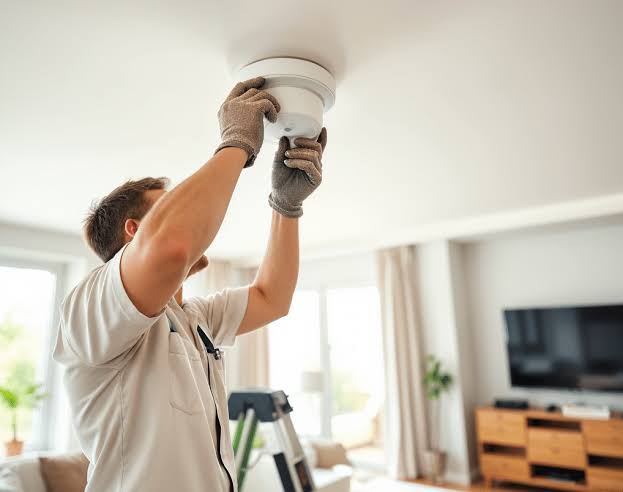
Maintenance matters as much as placement. Test every unit monthly with the test button, vacuum the sensor openings once or twice a year to clear dust, and replace the whole alarm after ten years from the manufacture date printed on the back. Then replace the batteries at the schedule the manufacturer sets, which for sealed units means never.
Combination units deserve their own note. A carbon monoxide sensor can fail quietly while the smoke sensor keeps working, so treat a combination alarm as two devices with one replacement date. Manufacturers such as First Alert and Kidde publish the replacement intervals in the manuals, and they usually match the ten-year rule.
Costs, Subscriptions, and Insurance Discounts
Smart alarms cost more than basic ones, and the gap buys convenience rather than fire protection. A basic alarm protects a room; a smart alarm protects a room and tells you about it. If your budget is tight, spend it on more alarms in more rooms before you spend it on connectivity, because coverage saves lives and notifications save property.
Subscriptions are the hidden line item. Professional monitoring, cellular backup, and long video or event history usually require a monthly fee, while local alarms and phone notifications often do not. Read the plan details before you buy, and check whether the alarm keeps working after the trial period ends.
Insurance discounts are worth a phone call but not high expectations. Most carriers connect discounts to centrally monitored security systems, not to smart smoke alarms on their own. Ask your insurer what documentation they need, because the answer differs by company and by state. The FTC’s guidance on securing connected devices is a useful checklist for the account side of the same purchase.
FAQ
Do smart smoke detectors work when the internet goes down?
The siren does, and that is the part that matters in a fire. Phone alerts, app history, and voice announcements usually stop until the connection returns. Check the manual for the offline behaviour before you rely on a notification.
Can I add a smart alarm to existing hardwired alarms?
Sometimes. Wireless interconnection covers gaps between brands, but it rarely works across manufacturers. In practice, most owners replace a set at once, or they keep one system per floor and accept two separate alerts.
Are they worth it over a basic alarm?
They are worth it if you travel, live alone, or want spoken alerts and history. They are not worth it if the money would otherwise buy a second and third alarm for rooms you have not covered yet. Coverage comes first.
Do smart alarms detect carbon monoxide as well?
Many combination models do, but the two sensors are separate. Read the specification carefully, because a smoke-only smart alarm will not warn you about carbon monoxide at all.
Will they work with Alexa, Google Home, or HomeKit?
It depends on the model and the standard it supports. Matter devices work across the major ecosystems, while older brand-specific models work only inside their own app. Check the compatibility list for the exact model, not the brand.
What happens at the end of the alarm’s life?
The unit reports an end-of-life signal, and you replace the whole alarm rather than the sensor. Ten years is the usual figure. A smart alarm that beeps a fault code after a decade is doing its job, not malfunctioning.
Final Thoughts
Smart smoke detectors are a convenience upgrade bolted onto a safety device, and both halves deserve attention. Buy certified hardware, keep the siren independent of the network, cover the rooms that matter, and set a ten-year replacement date on the calendar. Do that, and the app alerts and voice warnings become a useful bonus rather than a substitute for the fundamentals. Coverage still comes first, in every room, on every level.
Building the rest of your safety setup at the same time? Our DIY smart home security system guide covers cameras, sensors, and sirens in the same practical way.
Written by Ángel D. Serrano, who runs Automating Our Home. Finishing a philosophy degree, a patient reader of manuals, and the person who has broken more smart plugs than he will admit. He writes the guides so you only have to decide once.