Smart bulbs are the easiest gateway into the smart home, and for good reason. You screw one into a lamp, connect it to an app, and suddenly you have voice control, schedules, and colors. However, the category has grown crowded, and the differences between bulbs matter more than the marketing suggests. Some need a hub, some don’t. Some do color brilliantly, while others only do white. In this guide, we compare the best smart bulbs for 2026 across connectivity, light quality, and ecosystem fit. We also explain the specs, so you can shop with confidence.
How to Choose the Best Smart Bulbs
Before naming brands, it helps to know the five decisions that shape every purchase:
- Connectivity: hub or direct? Some bulbs connect straight to your Wi-Fi. Others use Zigbee or Thread and rely on a hub or bridge. Direct bulbs are simpler for beginners, while hub-based systems handle many bulbs more reliably.
- White, tunable white, or color? White-only bulbs are the budget choice. Tunable white shifts between warm and cool light. Full color adds millions of shades, and most people use color far less than they expect.
- Brightness and warmth. Brightness matters in lumens, not watts, and warmth matters in color temperature. A cozy 2700K suits bedrooms, while 4000K or higher suits kitchens and offices.
- Ecosystem compatibility. Check Alexa, Google Home, Apple Home, or Matter support before buying, since your voice assistant determines how the bulb fits your home.
- No subscription, ever. Smart bulbs are refreshingly free of monthly fees, and the major brands keep core control local. That makes them the most honest value in the smart home.
Philips Hue: The Ecosystem Standard
Philips Hue practically invented the mainstream smart bulb, and its ecosystem remains the deepest in the category. Hue bulbs work with Alexa, Google Home, and Apple Home, and the line spans every shape and fixture you can name.
- The largest lineup. From standard A19 bulbs to recessed, filament, and outdoor models, Hue covers fixtures other brands ignore.
- Reliable hub architecture. The Hue Bridge handles dozens of bulbs without straining your Wi-Fi, and automations keep running even when the internet drops.
- Mature app and scenes. Decades of software polish show in routines, scenes, and accessory support like dimmer switches and motion sensors.
- Matter ready. Hue bridges and newer bulbs support Matter, which keeps the ecosystem future-proof.
Where Hue asks for more in return:
- Premium pricing. Hue bulbs cost more per bulb than any mainstream rival, and the Bridge is an extra purchase.
- Bluetooth limits. Without the Bridge, bulbs pair directly over Bluetooth with basic control only, so the Bridge is effectively required for the full experience.
Best for: buyers who want the widest range, the most reliable multi-bulb setup, and an ecosystem that will still exist in a decade.
LIFX: No Hub, Maximum Brightness
LIFX takes the opposite approach: every bulb connects directly to your Wi-Fi, with no hub and no bridge. The brand built its reputation on vivid color and genuinely bright output.
- No hub required. Screw in the bulb, join your Wi-Fi, and it works, which makes LIFX ideal for renters and single-room setups.
- Impressive brightness and color. LIFX bulbs consistently rank among the brightest and most saturated color bulbs available.
- Wide assistant support. Alexa, Google Home, and Apple Home are all covered, with Matter support growing across the range.
- Software features included. Schedules, scenes, and effects come built into the app with no subscription.
Where LIFX asks for more in return:
- Wi-Fi load. Every bulb is a Wi-Fi client, so a whole-home setup can crowd your network without a solid router.
- Smaller ecosystem. LIFX makes great bulbs and strips, but far fewer accessories than Hue.
Best for: renters and minimalists who want brilliant color without buying a hub.
Wyze Bulbs: The Budget Champion
Wyze made its name with cheap, capable cameras, and its bulbs follow the same playbook. The Wyze app handles the bulbs directly over Wi-Fi, and the price undercuts almost everything else.
- The lowest entry price. A Wyze bulb costs a fraction of a Hue bulb, which makes outfitting a whole apartment affordable.
- Simple setup. No hub, no account gymnastics, just the Wyze app and your Wi-Fi.
- Decent quality for the price. Tunable white and color models cover the essentials without embarrassing gaps.
- Optional extras stay optional. Wyze’s subscription applies to cameras and AI features, not to basic bulb control.
Where Wyze asks for more in return:
- Basic ecosystem. Wyze bulbs work with Alexa and Google, but Apple Home and Matter support are limited or absent.
- Less polish. Colors, dimming smoothness, and app design trail the premium brands.
Best for: budget buyers furnishing many rooms at once, and anyone new to smart lighting.
Govee: Maximum Effects for Less
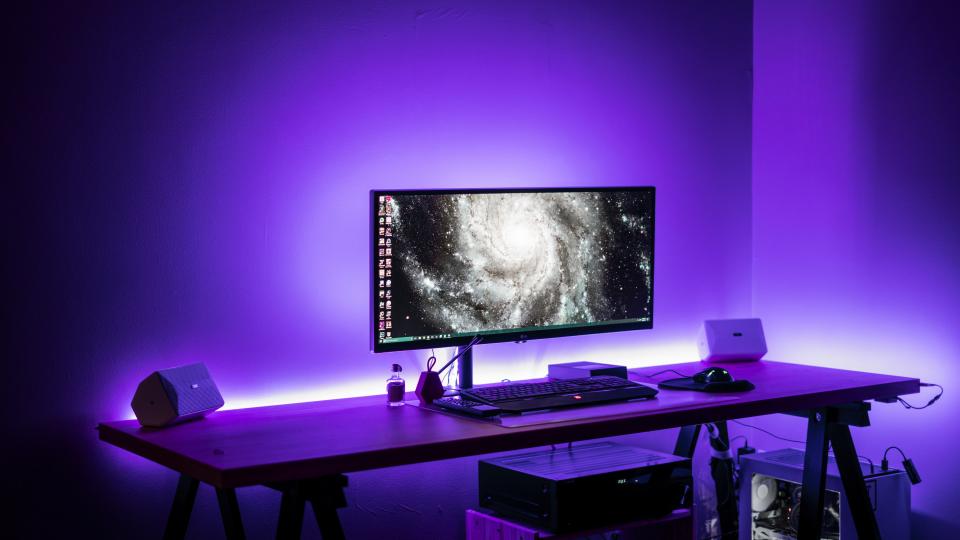
Govee targets the fun side of lighting, with an enormous catalog of bulbs, strips, and effect-heavy fixtures. Its RGBIC technology lets segments of a strip show different colors at once, which gamers and TV-backlight fans love.
- Effects and scenes other brands skip. Music sync, gaming modes, and ambient effects come standard.
- Huge catalog at fair prices. Bulbs, strips, and decorative lights cover almost any project without premium pricing.
- Solid app and assistant support. Alexa and Google work well, and the app is friendlier than its price suggests.
Where Govee asks for more in return:
- Not a serious ecosystem. Govee shines for ambiance, but its bulbs lack the reliability depth of Hue for whole-home automation.
- Apple Home support is inconsistent. Check model-level compatibility if you live in HomeKit.
Best for: mood lighting, entertainment setups, and buyers who want the most effects per dollar.
Side-by-Side Comparison
| Philips Hue | LIFX | Wyze | Govee | |
|---|---|---|---|---|
| Hub required | Yes, Bridge for full features | No | No | No |
| Best light type | Full ecosystem, any fixture | Vivid color, bright output | Budget white and color | Effects and RGBIC strips |
| Assistant support | Alexa, Google, Apple, Matter | Alexa, Google, Apple, Matter | Alexa, Google | Alexa, Google |
| Subscription | None for core control | None | None for bulbs | None |
| Standout strength | Depth and reliability | Hub-free color | Price | Effects per dollar |
| Best fit | Whole-home buyers | Renters, color fans | Budget buyers | Entertainment setups |
Understanding Bulb Specs Like a Pro
Spec sheets intimidate people, but three numbers explain almost everything:
- Lumens measure brightness, not watts. A 60W-equivalent LED bulb typically puts out around 800 lumens, while 1,100 lumens matches a brighter 75W bulb.
- Kelvin measures warmth. Lower numbers are warmer: 2200K is candle-like, 2700K is the classic cozy bulb, 4000K is neutral, and 5000K or more is cool daylight.
- CRI measures color accuracy. A CRI above 90 means colors look natural, which matters for makeup mirrors and art.
Match the spec to the room, and the bulb choice gets easier. Warm tones suit living rooms and bedrooms, while cooler tones help kitchens and home offices.
Which Bulb Shape for Which Fixture
Fixtures decide compatibility before brands ever enter the picture:
- A19 or A21 are the classic pear-shaped bulbs for lamps and open fixtures.
- BR30 bulbs fit recessed ceiling cans, with a wider beam for downlights.
- GU10 and MR16 are the standard spotlight bases in track and ceiling spots.
- E12 candelabra and filament bulbs suit chandeliers, sconces, and exposed-bulb designs.
Check the base type printed on your fixture before shopping, since returning a box of wrong bulbs is a classic first mistake.
Routines, Scenes, and Automation Ideas
The real payoff of smart bulbs arrives after setup, when lights start working for you. A sunrise alarm scene fades the bedroom lights on gently over 30 minutes, which beats any phone alarm clock. A reading scene drops the living room to warm dim light with one voice command. Meanwhile, arrival scenes shine. When your smart lock unlocks the door, entry lights can turn on automatically. We covered that trick in our guide to the best smart locks for front doors.
Start with one routine that saves you effort every day. Then add scenes as you learn the app, since most owners use a handful of automations rather than the full feature list.
Using Lights to Deter Burglars
A dark house is an invitation, and lights are the cheapest deterrent in the book. Away mode is the classic trick. Set a few lamps to follow a natural schedule, turning on and off at plausible times while you’re away. Some apps add randomization, so the pattern looks lived-in rather than scripted.
Lights also work as a second layer for your security setup. Motion-triggered exterior lights startle visitors before cameras even matter, and indoor lights on schedules make empty rooms look occupied. Our DIY smart home security system guide covers the full layered approach, where lighting plays a supporting role alongside sensors and cameras.
In other words, smart bulbs protect your home twice: once through automation, and once through simple deterrence.
No Subscriptions: What Smart Bulbs Got Right
Security cameras and doorbells push subscriptions, but smart bulbs largely don’t. The major brands keep scheduling, scenes, and voice control free, which is a genuine industry win. Some companies add paid tiers for advanced effects or cloud history, but the core bulb experience never requires one. Therefore, when you budget for smart lighting, the price on the box is essentially the total price, and that’s rare in the smart home world.
Our Recommendation by Situation
- First smart bulb ever, tight budget → a Wyze bulb, to learn the habits before spending more.
- Whole-home rollout, want it to last → Philips Hue with the Bridge, for reliability and range.
- Renting, brilliant color, no hub → LIFX, which moves easily between homes.
- Gaming room or TV setup → Govee, for effects that other brands don’t offer.
- Apple household → Hue with Matter, or check LIFX model-level HomeKit support.
- Kitchen or office task lighting → tunable white bulbs with cooler temperatures and high CRI.
Final Thoughts
The best smart bulbs in 2026 are not the ones with the most colors. They’re the ones that match your fixtures, your assistant, and your budget, and the brands above cover those bases well. Start small, with one lamp and one routine, and expand only when the habit sticks. Smart lighting rewards patience: a few well-chosen bulbs, automated well, will change how your home feels more than a dozen forgotten gadgets ever could.
Once the lights work, the rest of the smart home follows. Our DIY smart home security system guide shows how lighting, sensors, cameras, and locks fit together.